Bachelor of Science (BS) in Economics
Location: LAU Beirut & Byblos
Delivery Mode: On- campus
Duration: three years (for students admitted as sophomores)
Start Term: Fall or Spring
Total Credits: 92
Department: Economics
The first AACSB accredited economics program in Lebanon.
Program Overview
Economics is a social science that studies the allocation of scarce resources, welfare implications of resource allocation, markets, problems of economic growth and development of nations, questions of political economy, and government regulation and public policies.
The BS in Economics degree, which introduces students to the theory and application of economic analysis, is an excellent preparation for graduate studies in economics (see MA in Applied Economics), business, finance, law, public administration, sociology, international relations and other related fields.
Admission
Admission to any of the undergraduate programs offered at the Adnan Kassar School of Business follows the LAU general undergraduate requirements.
According to the LAU Admissions Office, all undergraduate applicants must submit:
- One recent passport-size photos (taken within the past six months).
- A clear photocopy of your identity card or passport.
- Proof of English proficiency via your official TOEFL, EEE, or SAT I writing section, the IELTS or the ACT Writing section. The IELTS and the ACT Writing are effective Fall 2016.
- Your official SAT I (math, critical reading, and writing) scores or the ACT effective Fall 2016.
- Your certified official secondary school certificate. If it is not available yet, submit it to the Admissions Office on the campus of your choice as soon as it becomes available. Lebanese students with non-Lebanese diplomas must also submit the Equivalence of Lebanese Baccalaureate from the Ministry of Education.
- Official transcript from schools you attended in the last three years. If your grades from the last year or semester are not available when you apply, they should be sent as soon as they are available. If you have studied one year at university, you have to secure the grades of your last two years at school. Transcripts should be sent to the Admissions Office on the campus of your choice in a sealed and stamped envelope.
Lebanese students who graduated from a non-Lebanese program must submit:
- The equivalence to the Lebanese baccalaureate from the Lebanese Ministry of Education.
Note: If this document is not available when you submit your application, you may submit it as soon as it is available.
Students transferring from another university must submit:
- Official transcripts of your grades from your current university along with a course catalog. Undeclared transcripts cannot be accepted after enrollment.
- Please read about the requirements for transfer applicants, as you may need to provide other documentation depending on your particular case.
Program Requirements
To obtain the BS in Economics degree, the student should complete a total of 92 credits composed of:
- Business Requirements (12 credits)
- Quantitative Requirements (10 credits)
- Economics Requirements (12 credits)
- Economics Electives (18 credits)
- Liberal Arts and Sciences Core Requirements (6 credits)
- Liberal Arts and Sciences Electives (24 credits)
- Free Electives (16 credits)
Business Requirements (12 credits)
| Number | Course | Cr. |
| ACC203 | Financial Accounting | 3 |
| ECO340 | Economics of Organizations and Management | 3 |
| FIN301 | Managerial Finance | 3 |
| MKT201 | Introduction to Marketing | 3 |
Quantitative Requirements (10 credits)
| Number | Course | Cr. |
| QBA201 | Managerial Statistics | 3 |
| ECO304 | Mathematical Methods for Economics | 3 |
| ECO332 | Introductory Econometrics | 4 |
Economics Requirements (12 credits)
| Number | Course | Cr. |
| ECO201 | Microeconomics | 3 |
| ECO202 | Macroeconomics | 3 |
| ECO305 | Intermediate Microeconomics | 3 |
| ECO306 | Intermediate Macroeconomics | 3 |
Economics Electives (18 credits)
3 credits from the following courses:
| Number | Course | Cr. |
| ECO344 | Economics, Ethics and Philosophy | 3 |
| ECO346 | Foundations of Political Economy | 3 |
3 credits from the following courses:
| Number | Course | Cr. |
| ECO311 | Economic Development | 3 |
| ECO333 | Comparative Economic Systems | 3 |
12 credits from the following courses:
| Number | Course | Cr. |
| ECO422 | Public Finance | 3 |
| ECO320 | Environmental, Resource and Energy Economics | 3 |
| ECO420 | Monetary Theory and Policy | 3 |
| ECO335 | International Economics | 3 |
| ECO402 | Special Topics in Economics | 3 |
| ECO342 | Labor and Human Resource Economics | 3 |
Liberal Arts and Sciences Core Requirements (6 credits)
| Number | Course | Cr. |
| ENG202 | Advanced Academic English | 3 |
| COM203 | Art of Public Communication | 3 |
Liberal Arts and Sciences Electives (24 credits)
6 credits are completed by passing ECO201 and ECO202
Free Electives (16 credits)1,2,
1 Students planning to do graduate work in economics are advised to take at least MTH 201, MTH 301 and MTH 304.Free Electives (16 credits)1,2,3
2 Students who want to increase their knowledge in related business fields are advised to choose from the following courses: FIN302, FIN 411, FIN 421, MGT441, MGT301, IBS311, HOM321 and FEB301.
3 Students are recommended to do a minor in a related field of study. Options available now at LAU: minor in Business, Mathematics, Political Science, Legal Studies, Actuarial Studies, and Computer Science.
4 Students are strongly encouraged to finish the English requirements within the first two academic years.
Program Goals and Outcomes
The BS in Economics aims to offer candidates a deep understanding of business markets, organizations, trade, government and business policies.
The graduate will:
- Possess knowledge of core economic principles, theories and quantitative tools.
- Have the ability to use economic analysis for the solution of business and organizational problems.
- Have an understanding of the workings of economic policy instruments and objectives, and the linkages between the public sector and the private economy.
- Use written and oral communication effectively.
Upon completion of the degree requirements, the graduate will be able to:
- Demonstrate knowledge of key economic principles and theories of the macro and micro dimensions of market economies.
- Express economic relationships using graphical and mathematical tools, and to empirically examine such relationships using regression methods.
- Propose a solution to a business or economic problem using qualitative and quantitative reasoning.
- Identify and evaluate the social and ethical implications of economic policy, theory and the market economy.
- Deliver an effective oral presentation.
- Demonstrate effective written communication.
Courses
ECO201 Microeconomics[3-0, 3 cr.]
This course is an introductory course dealing with the nature and scope of economics, consumer behavior, theory of the firm, price determination and allocation of resources.
ECO202 Macroeconomics [3-0, 3 cr.]
This course is an introductory course dealing with the principles of national income accounting, national income determination, macroeconomics’ objectives and policy instruments, and the relative effectiveness of fiscal and monetary policies in stabilizing the economy.
ECO304 Mathematical Methods for Economics [3-0, 3 cr.]
This course covers advanced mathematical methods and tools used in modern economics. The course includes a brief calculus review, matrix theory, constrained optimization, and elements of game theory and dynamical systems.
Prerequisites: BUS105 Business Math or equivalent.
ECO305 Intermediate Microeconomics[3-0, 3cr.]
This course covers in depth the theory and applications of consumer and producer behavior. It covers topics such as price/wage determination under various market structures, estimation of demand for a given product, analysis of a firm’s pricing strategies, levels of price discrimination, comparison of the welfare effects of different policies, and externalities and public goods.
Prerequisites: ECO201; ECO202
ECO306 Intermediate Macroeconomics[3-0, 3 cr.]
This course uses the latest theoretical techniques and models in macroeconomics to address the measurement and determination of income, prices, employment, interest rates, and aggregate demand and supply. The course also stresses stabilization, fiscal and monetary policies, various schools of macroeconomic thought and the sources of instability in the private economy.
Prerequisites: ECO201; ECO202
ECO311 Economic Development[3-0, 3 cr.]
This course covers the theories of economic development, planning and policies. The course also discusses the building of institutional mechanisms to achieve development.
Prerequisite: ECO201; ECO202
ECO320 Environmental, Resource, and Energy Economics[3-0, 3 cr.]
This course introduces students to the basics of environmental and natural resource economics and the fundamentals of environmental policymaking. The first part of the course will discuss environmental pollution and policy solutions, the second part will discuss natural resource exploitation, sustainability and keys issues in energy economics. The course also highlights scientific facts that shape environmental policy debates.
Prerequisites: ECO201; ECO 202; ECO305
ECO332 Introductory Econometrics[4-0, 4 cr.]
This course introduces students to the theory and practice of econometric analysis. The course will include simple regression models, multiple regression models, regression with discrete random variables, and topics in time series analysis.
Prerequisites: QBA201 .
ECO333 Comparative Economic Systems[3-0, 3 cr.]
This course will examine the basic principles and institutions of past and contemporary economies, with a special emphasis on capitalist, socialist and mixed economic systems. The course provides information on the methodology to be employed in making economic and social comparisons across countries and regions, by exploring differences in institutions, policy and performance. In addition to comparing capitalist and socialist systems, the course will study the contemporary experience of transition from one economic system to another. The course will also devote attention to the growing interest in the comparative analysis of institutions in capitalist societies, and to the historical evolution of these institutions. This introduces students to recent comparative research on globalization and varieties of capitalism.
Prerequisites: ECO201; ECO202
ECO335 International Economics[3-0, 3 cr.]
This course deals with the principles of trade, resource allocation among nations, international monetary and exchange rate arrangements, and trade restriction problems.
Prerequisites: ECO201; ECO202
ECO340 Economics of Organizations and Management[3-0, 3 cr.]
This course is an introduction to the economics of organizations and management. The course focuses on decision-making within a firm and strategic interactions among firms in industries. The objective is to develop the knowledge and strategies useful in making efficient business or managerial decisions both within firms and between firms in different market settings. The course will also study the application of economic models to address the effectiveness of organizations.
Prerequisites: ECO201; ECO202.
ECO342 Labor and Human Resource Economics[3-0, 3 cr.]
This course introduces students to the economic analysis of labor markets and theories of human resources economics. The course includes topics in labor demand and supply, human capital accumulation, wage determination, inequality in earnings, unions and collective bargaining, training and human-resource development, productivity and pay, and labor discriminations.
Prerequisites: ECO201; ECO202
ECO344 Economics, Ethics and Philosophy[3-0, 3 cr.]
This course is an exploration of some topics at the intersection of economics, ethics and philosophy. The course will examine the ethical and philosophical foundations of normative economics, by seeking to understand the role of efficiency and equity considerations in economic behavior and policy-making. It seeks to investigate the role of ethical theories and concepts in comprehending economic life. The course will also examine questions concerning the methodology of economics, and the distinct nature of economics as a science. Some of the topics to be explored include rationality, self-interest, value, welfare, justice, optimality, models, causality and reductionism.
Prerequisites: ECO201; ECO202.
ECO346 Foundations of Political Economy[3-0, 3 cr.]
The course will address the fundamentals of political economy: production, exchange, value, and distribution. The course mainly is an exploration of the ideas of Adam Smith, Thomas Malthus, David Ricardo, Karl Marx and John Maynard Keynes. In addition, marginalist theory will be studied within the context of evolution of economic thought. The basic ideas of Veblen, Hayek and Schumpeter will also be briefly discussed. The course will draw lessons for the understanding of modern capitalism, in relation to issues such as technological change, market competition, wealth creation, income distribution, instability, long-run capitalist development, morality and class conflict.
Prerequisites: ECO201; ECO202
ECO402 Special Topics in Economics[3-0, 3 cr.]
This course deals with selected topics in economic theory.
Prerequisite: At least 12 credits in economics courses. This course may be repeated for credit when topics vary.
ECO420 Monetary Theory and Policy[3-0, 3 cr.]
This course covers money and the banking system’s nature and functions. The course covers the interaction between the monetary and real sectors, money supply and demand analysis, and the theory and transmission mechanisms of monetary policy, and central banking.
Prerequisites: ECO306
ECO422 Public Finance and Fiscal Policy[3-0, 3 cr.]
This course addresses government intervention under conditions of market failure. Topics covered include public debt, government expenditure patterns, and tax structures. These are considered from the perspective of government services provision and as public policy instruments.
Prerequisite: ECO201; ECO202
Recommended Study Plan
Year One (30 credits)
- ACC203Financial Accounting (3 cr.)
- ECO201Microeconomics (3 cr.)
- ECO202Macroeconomics (3 cr.)
- MKT201Introduction to Marketing (3 cr.)
- QBA201Managerial Statistics (3 cr.)
- ENG202 Advanced Academic English (LAS Core 3 cr.)
- COM203 Art of Public Communication (LAS Core 3 cr.)
- LAS Electives (6 cr.)
- Free Electives (3 cr.)
Year Two (31 credits)
- ECO304Mathematical Methods for Economics (3 cr.)
- ECO305Intermediate Microeconomics (3 cr.)
- ECO306Intermediate Macroeconomics (3 cr.)
- ECO332Introductory Econometrics (4 cr.)
- FIN301Managerial Finance (3 cr.)
- Economics Elective (3 cr.)
- LAS Electives (6 cr.)
- Free Electives (6 cr.)
Year Three (31 credits)
- ECO311Economic Development (3 cr.)1
- ECO340Economics of Organizations & Management (3 cr.)
- ECO344Economics, Ethics & Philosophy (3 cr.)2
- Economics Electives (9 cr.)
- LAS Electives (6 cr.)
- Free Electives (7 cr.)
1 orECO333Comparative Economic Systems (3 cr.)
2orECO346Foundations of Political Economy (3 cr.)
Career Prospects
The BS in Economics provides students with the foundations of theoretical and applied economics. Students are prepared to work after graduation in business, government, international organizations and finance.
With a Bachelor of Science in Economics, areas in which the graduate may pursue a career are:
- Economic Consultancy
- Banking
- Public Sector
- Management Consulting
- Business and Economic Reporting
- Policy Advising for Local and International Organizations
- Statistics
- Investment
- Financial Risk
Alumni Placements
Many of our BS in Economics graduates have secured employment opportunities in international organizations, consulting firms, NGOs and multinational corporations.
- United Nations High Commissioner for Refugees (UNHCR)
- United Nations Development Programme (UNDP)
- United Nations Economic and Social Commission for Western Asia (ESCWA)
- PricewaterhouseCoopers-PwC
- The Arab Council for Social Sciences, NGO
- CMA CGM
- Podeo Inc.
- Publicis Media - Leo Burnett
- Boston Consulting Group
- Barcelona School of Economics
- London School of Economics
- Abertay University, Scotland
- IE University, Spain
- HEC Paris
- Barcelona School of Economics
Testimonials

Roy Jason Hourany, Senior Performance Marketing Executive; Publicis Media | LVMH
The BS in Economics at LAU has equipped me with a fully rounded way of thinking, helping me make better informed quantitative and qualitative decisions in my current position as Senior Performance Marketing Executive for Publicis Media | LVMH. It has challenged me to be a better decision-maker maker, driving businesses to better streamline their marketing expenses to streamline their marketing expenses better.

Mouhannad Arabi, Retirement Consultant at WTW, Belguim
My journey began at LAU in 2016, where I pursued a Bachelor of Science in Economics, supported by scholarships from LIFE and LAU. Those years were transformative—I graduated in 2019 with high distinction, along with minors in Mathematics and Actuarial Science. LAU wasn’t just about academics; it was about mentorship and growth. Professors like Dr. Jachi left a lasting impact, teaching me that decision-making isn’t just for business—it’s a life skill. With LAU’s solid foundation, I pursued a Master’s in Actuarial and Financial Engineering at KU Leuven, graduating with distinction in 2021, and a second Master’s in Statistics and Data Science, also with distinction, in 2024. Along the way, I worked as a Senior Actuarial Analyst at Cigna and now as a Retirement Consultant at WTW while pursuing an MBA at IE University. LAU’s lessons still guide me, shaping the person and professional I am today.”
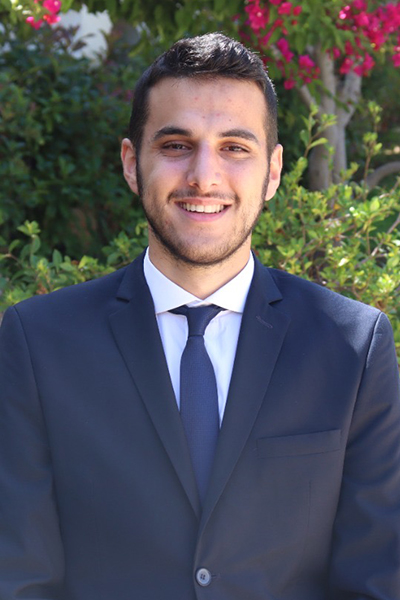
Shady Abi Fares, Chevening Scholar, London School of Economics and Political Science (LSE).
Pursuing a dual degree in Economics and Political Science/International Affairs at LAU during a transformative and turbulent period in Lebanon shaped my interest in development studies. The combination of multidimensional economics coursework and exposure to the country’s unfolding economic and social crises helped deepen my understanding of Lebanon’s development challenges. It ultimately led to a role at the United Nations Development Programme in Beirut. My academic and professional background earned me a prestigious Chevening Scholarship to study in the UK, where I am currently pursuing an MSc in Development Management at the London School of Economics and Political Science (LSE).
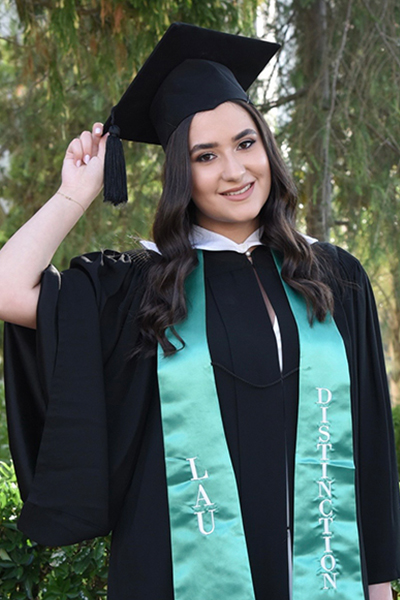
Renee Gebran, Consultant in Sustainable Finance, A2 Consulting, France.
During my time at LAU, I grew both academically and personally. The three years I spent there provided me with a strong foundation in Economics and helped shape my personality, preparing me for the challenges of pursuing a master’s degree abroad. I am now working in sustainability consulting in Paris, and I’m grateful for how my studies at LAU contributed to getting me where I am today. I’ll always be thankful for the instructors who inspired me and the connections that made my journey so memorable.
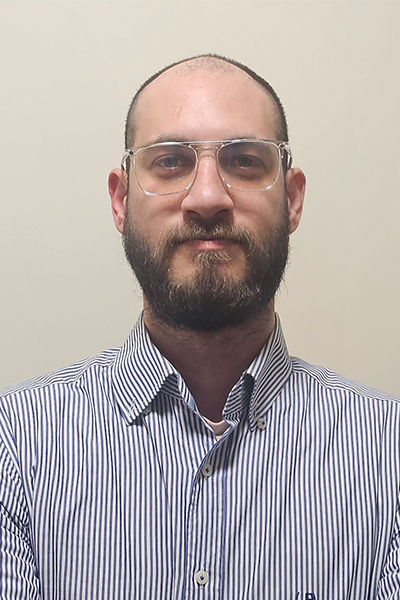
Hussein Wizani, Business Analyst, Podeo
With a passion for economics, I joined LAU’s prestigious Department of Economics, a decision that shaped my academic and professional journey. The program’s balance of theory and practice sharpened my critical thinking and research skills. LAU’s reputation made it easier to secure internships before graduating, including at Caux – Initiatives of Change in Switzerland and the Central Bank of Lebanon. After graduating in 2016, I worked in market research and later as a cloud consultant. Returning to LAU in 2020 for a master’s, I joined Podeo Inc., MENA’s fastest-growing podcasting startup, where I lead analytics. Now, I am pursuing an MBA in Business Analytics.
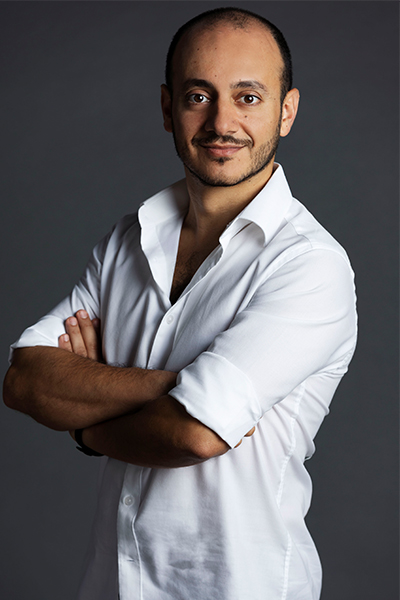
Mazen Kanaan, Co-founder and CEO of House of Pops
My academic journey at LAU was truly transformative. The BS in Economics program laid a solid foundation for my career, from its rigorous academic training to the invaluable experience of founding and presiding over the Economics Club. Earning high distinction and receiving the Torch Award remains one of my proudest achievements, reflecting the inspiring environment LAU fosters. Today, as the co-founder and CEO of House of Pops, a 100-person company producing ice cream in Dubai and selling across the GCC and recently Lebanon, I frequently draw on the analytical and strategic thinking cultivated during my time at LAU. The supportive faculty and collaborative spirit of the university were instrumental in shaping my path to success.
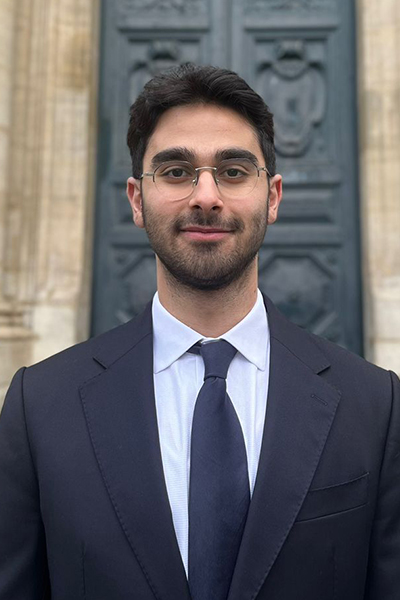
Ahmad Hani Bidawi, Panthéon-Sorbonne University
My BS in Economics at LAU provided a well-rounded education, seamlessly blending quantitative precisionwith qualitative analysis. A strong foundation in economics paired with advanced econometric coursework and lab sessions enhanced my analytical skills and prepared me for my master’s studies at Panthéon-Sorbonne University. Beyond academics, LAU fostered a vibrant community and a mindset of curiosity and critical thinking that drove my career forward. Seminars and collaborative projects bridged theory with practice, cultivating adaptability and problem-solving skills that I now apply daily in my sustainability consulting work in Paris. I’m proud to be an alumnus of this program.

Lara Kloumian, Senior Business Development & Support Officer, Berytech
My bachelor’s in economics from the Lebanese American University laid the foundation for my career in economic development. It provided me with a reservoir of knowledge to understand global economic trends and challenges while equipping me with tools and strategies to support SMEs and drive innovation and economic growth.

Theresia Rahme, Economics Reporter, LBCI
My academic journey began when I was selected by the U.S. Embassy to study economics at LAU, where I also pursued a minor in Arabic studies. Professionally, I worked as a media account consultant for Yellow Pages in Canada and interned at MEIRSS and the Central Bank, building expertise in economic research and monetary policy. As President of LAU’s Economics Club, I led impactful initiatives. Today, I work as an economic reporter at LBCI while pursuing my master’s in applied economics at LAU.
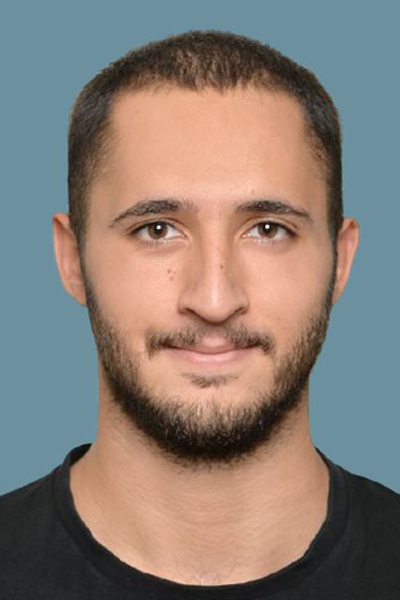
Jamal Skaiky, SKEMA Business School, Intern at CBRE, France
My journey at LAU as an economics student was nothing short of life-changing. The Economics Department felt like a second home, with incredible professors who nurtured my curiosity and pushed me to achieve my best. I cherished every moment, growing academically and personally. Today, I’m pursuing an MA in France and proudly interning at CBRE, carrying the lessons and values instilled by LAU with me.

Jessica Yarak, University of Melbourne
Graduating with a BS in Economics from LAU provided a strong foundation for my Master’s in Public Policy at the University of Melbourne. It enabled me to tutor students from multiple international institutions and led to my role as an economics tutor at Ormond College, University of Melbourne, and as a research fellow at the Tech Global Institute.