How AKSOB Students Navigated Lebanon’s Agri-Food Challenges
A hands-on experience pushed business students to think critically, adapt quickly and deliver under real constraints.
In spring 2026, senior management students at LAU’s Adnan Kassar School of Business (AKSOB) found themselves working on something that felt closer to practice than coursework.
They were not reviewing case studies or discussing hypothetical strategies. They were working directly with agri-food businesses across Lebanon, trying to understand real challenges as they unfolded and respond with solutions that could hold in a fragile and uncertain situation.
The experience was designed and led by Assistant Professor Samar Aad, as part of the MGT401 Project Management and MGT420 Strategic Management and Policy Formulation courses.
“The main objective was to bridge the gap between theoretical management knowledge and real-world application,” said Aad. “Engaging students in solving live strategic and operational challenges faced by local agri-food businesses was the main theme of the project, “Empowering Lebanon’s Agri-Food Entrepreneurs: Innovation, Resilience and Sustainable Growth,” she added.
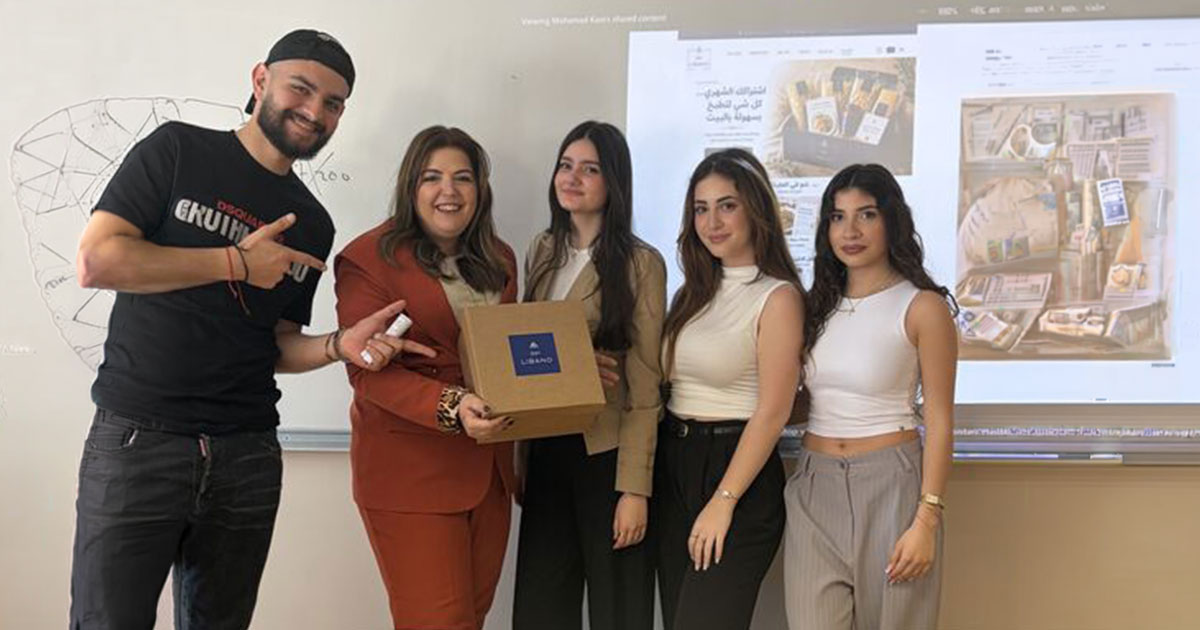
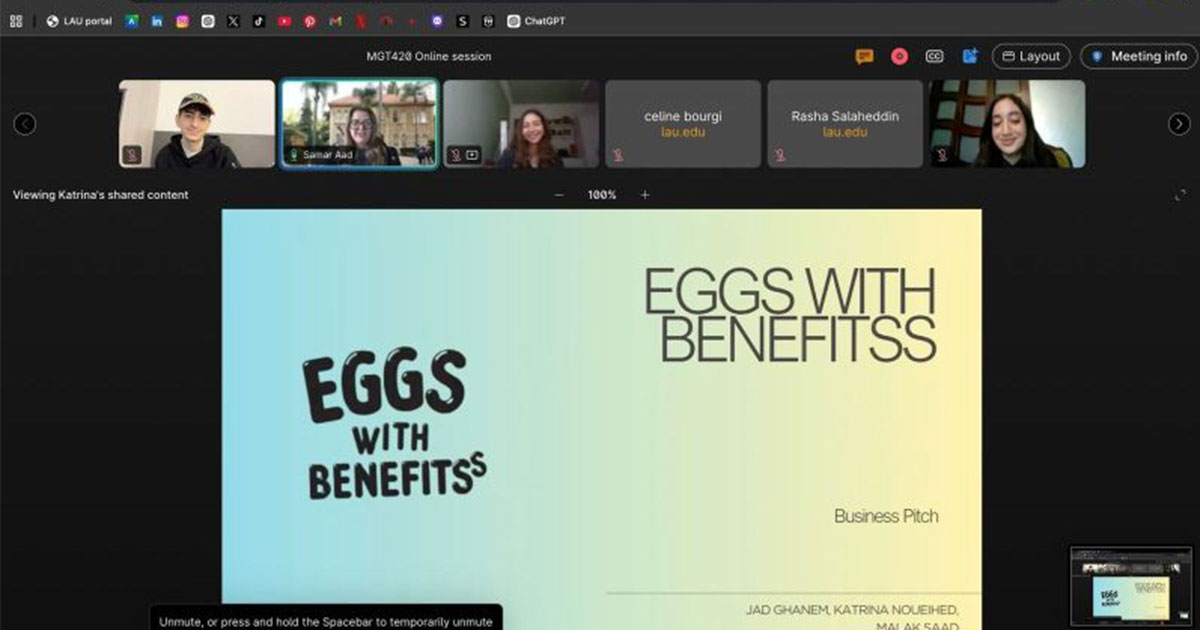
Students partnered with businesses such as Plant It, Skaff Farm, Del Libano and Eggs with Benefits. Each brought a different set of concerns, from unclear brand positioning to inconsistent customer experiences and limited market reach. “Students were engaged in transforming broad business challenges into clearly defined, actionable projects,” explained Aad.
“They diagnosed problems using analytical frameworks such as PESTEL, VRIO, value chain and Porter’s Five Forces, supported by primary and secondary research to develop strategies and implementable solutions tailored to each business’s operations,” added Aad.
The process did not stay theoretical for long. Participants were able to turn their data and insights into tangible outputs, such as AI-supported customer experience designs, branding and market expansion strategies, operational improvements and low-cost implementation plans.
“Our work with Eggs with Benefits was not only about visibility,” said Alaa El Ghali. “It was about rebuilding trust in a price-sensitive market and using strategy to create more meaningful connections with consumers while supporting responsible growth and healthier choices.”
The Skaff Farm team, Aline Eid, Lea Sadek, Khaoula Sahli, Jana Naser El Deen and Cezar Al Halabi, explained that even during the war, their training to work under pressure kicked in.
Students had to continue without direct access to the spaces they were designing, relying on virtual meetings, digital tools and continuous feedback from their clients to refine their ideas.
“We developed an experience-driven marketing strategy for Skaff Farm,” said Eid and Al Halabi. “It repositioned the farm as a rural escape, highlighting resilience and adaptability.”
“The main focus was on creating a low-cost, high-impact visitor experience for Skaff Farm,” said Sadek. “One that improves how people move, engage and connect with the space.”
At Skaff Farm, the team focused on the visitor experience. “We reimagined the visit as a guided, interactive journey that makes the experience more engaging and encourages people to return,” said Sahli.
Jana Naser El Deen explained that the team used AI tools to bring a structured, user-centered redesign of Skaff Farm to life. “It creates a smoother visitor flow while enhancing both learning and engagement.”
At Del Libano, attention turned to the brand itself. “We realized that having a strong product is not enough if the story behind it is not clear,” said Rim Tohme. “We worked on reconnecting the brand with its identity and heritage.”
Across the different projects, a pattern emerged. The most effective ideas were not the most complex ones. They were the ones that could be implemented with limited resources and still make a difference.
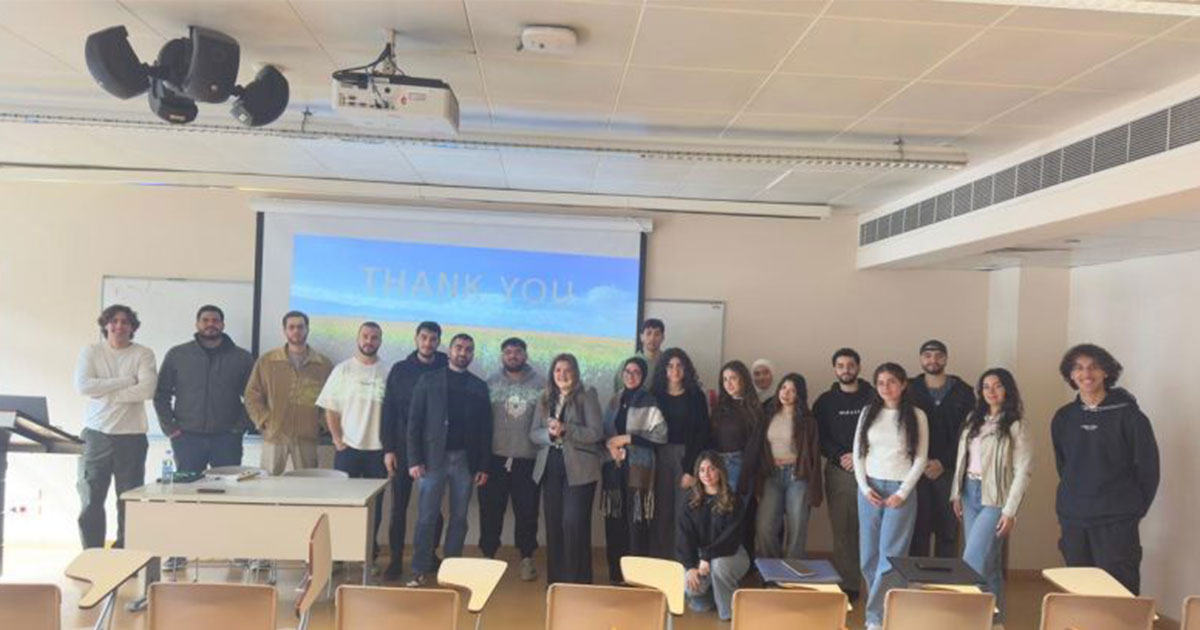
As the projects reached their final stage, students were asked to present and defend their strategies. It was no longer about proposing ideas but about explaining, justifying and showing that they could hold up under scrutiny.
That balance between conviction and flexibility became one of the most important takeaways. Students were not aiming for perfect answers. They were learning to make informed decisions in conditions far from ideal.
“These innovations reflect a clear shift,” commented Dr. Aad. “From idealized solutions to more resilient, adaptive strategies that help businesses stay competitive, build trust and create value even in uncertain conditions.”
By the end of the experience, what remained was not only a set of strategies but a shift in how students think. They learned to navigate complexity, move forward without complete clarity and create value within real constraints.
“Our work moved across experience design, AI-driven engagement, branding and market expansion,” said Aad. “But at its core, it was about building resilience and connecting what we learn to the future of the sector.”