LAU AKSOB Students Contribute to Lebanon’s Anti-Corruption Reform Agenda
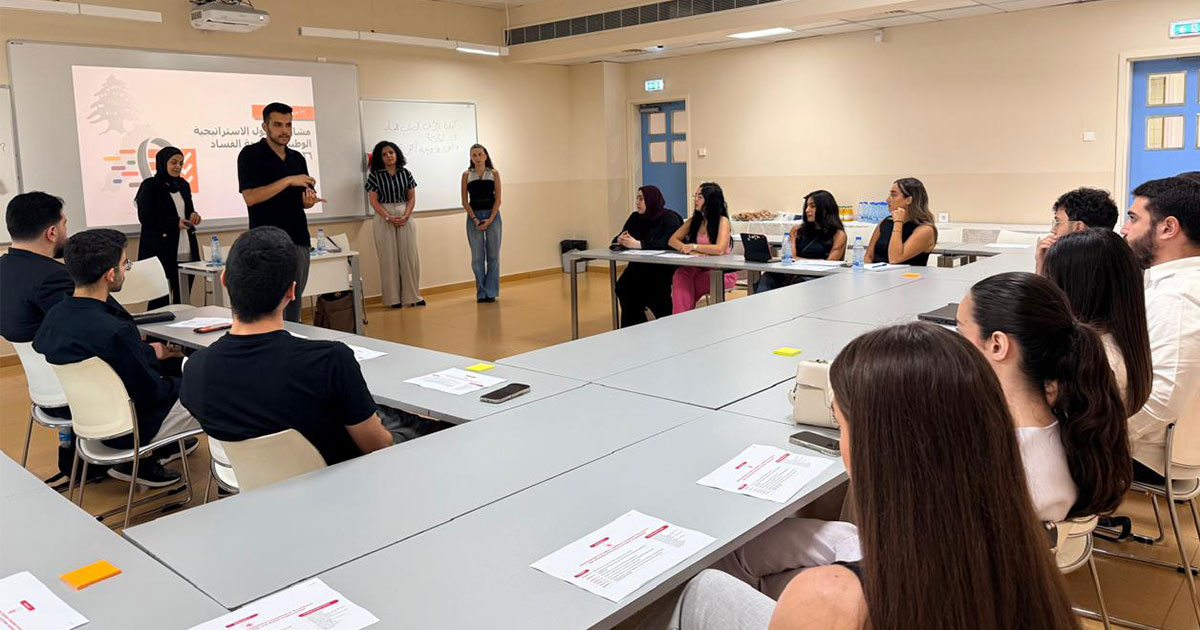
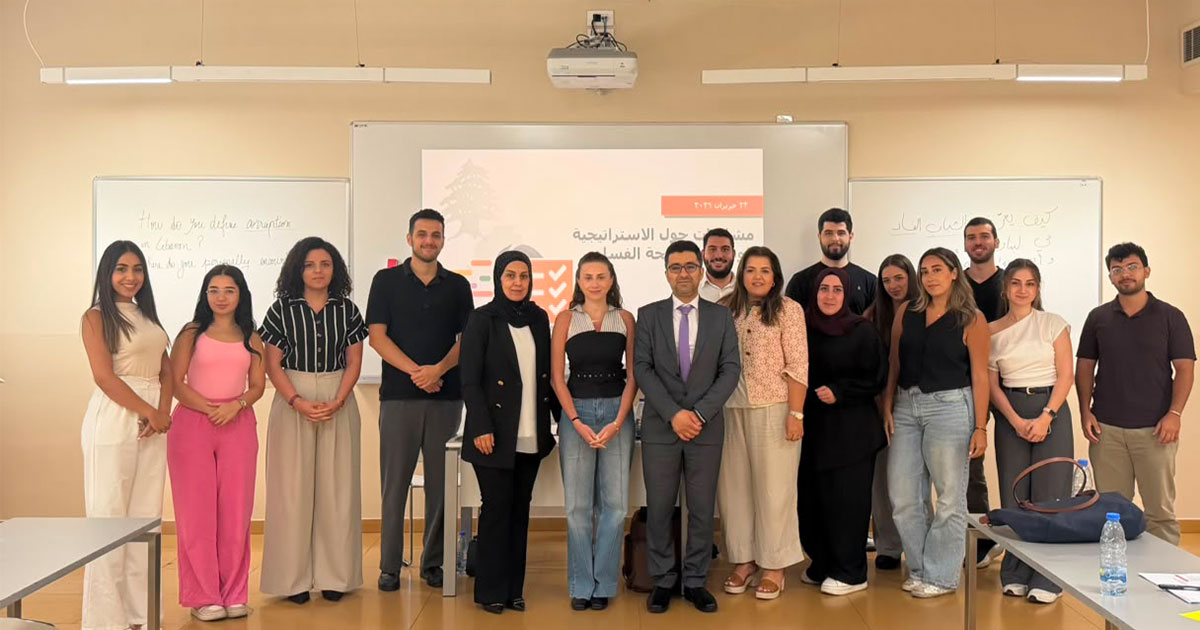
In partnership with the Office of the Minister of State for Administrative Reform, LAUers participated in a youth consultation on corruption, integrity, and governance.
The Adnan Kassar School of Business (AKSOB) hosted a youth consultation session on June 23, 2026, organized by the Office of the Minister of State for Administrative Reform (OMSAR), as part of a strategic partnership between AKSOB and OMSAR to include youth in national anti-corruption efforts. The consultation forms part of the broader update of Lebanon’s National Anti-Corruption Strategy 2026-2030, supported by the United Nations Development Programme (UNDP) with funding from the European Union and the Government of the Kingdom of Denmark.Facilitated by OMSAR’s Anti-Corruption Unit and members of the national task team supporting the role of youth in the National Anti-Corruption Strategy (NACS), the session at AKSOB on the Beirut campus engaged multidisciplinary graduate and undergraduate students in a structured dialogue on accountability, governance, integrity, and transparency. Through this participatory policy dialogue, students contributed their perspectives and recommendations on reform priorities, enabling youth to play a direct role in shaping the National Anti-Corruption Strategy 2026–2030.
Anti-Corruption Specialist at OMSAR Maha Mokdad explained the institutional framework of the NACS and highlighted the consultative and inclusive approach that the ministry is adopting in the update of the 2026-2030 NACS, which includes multiple stakeholders such as ministries, oversight bodies, judiciary, public administrations, private sector, universities, civil society organizations, and international organizations.
“We are seeking to look at anti-corruption reform through a youth lens: what young people see as priorities for strengthening integrity, transparency, accountability, and public trust; how technology can be leveraged to prevent corruption, improve public oversight, and enhance public service delivery; and how youth can play an active role in driving reform and building stronger, more accountable institutions.” Their perspectives and recommendations, added Mokdad, will be consolidated into a comprehensive report to inform the update of the NACS.
Welcoming attendees at the session, AKSOB Professor and Associate Dean Ali Fakih hoped that the discussion would be fruitful. In turn, Assistant Professor of Management Samar Aad encouraged the students to contribute meaningfully to actionable, nationwide reform.
LAU alumnus Shady Abi Fares (BA ’23), who is supporting OMSAR in this work, underscored the longer-term objective of establishing and activating a nationwide network of youth leaders who can contribute to reform implementation. Having served as secretary-general of the LAU Simulation Models, he is familiar with youth engagement and mobilization.