AKSOB Brings Future-Focused Skills to Today’s Workplace
LAU’s Institute of Human Resources Management hosted a three-part workshop series exploring leadership, resilience and digital transformation.
As workplaces grow more complex, the Institute of Human Resources Management (IHRM) at LAU’s Adnan Kassar School of Business (AKSOB) brought professionals and master’s students together to examine the skills needed to lead, communicate effectively, and navigate change.
Through its online Skills of the Future workshop series, held across March and April, participants engaged with industry experts on leadership, adaptability and digital transformation.
The three-part series offered interactive sessions that combined practical insight with personal growth.
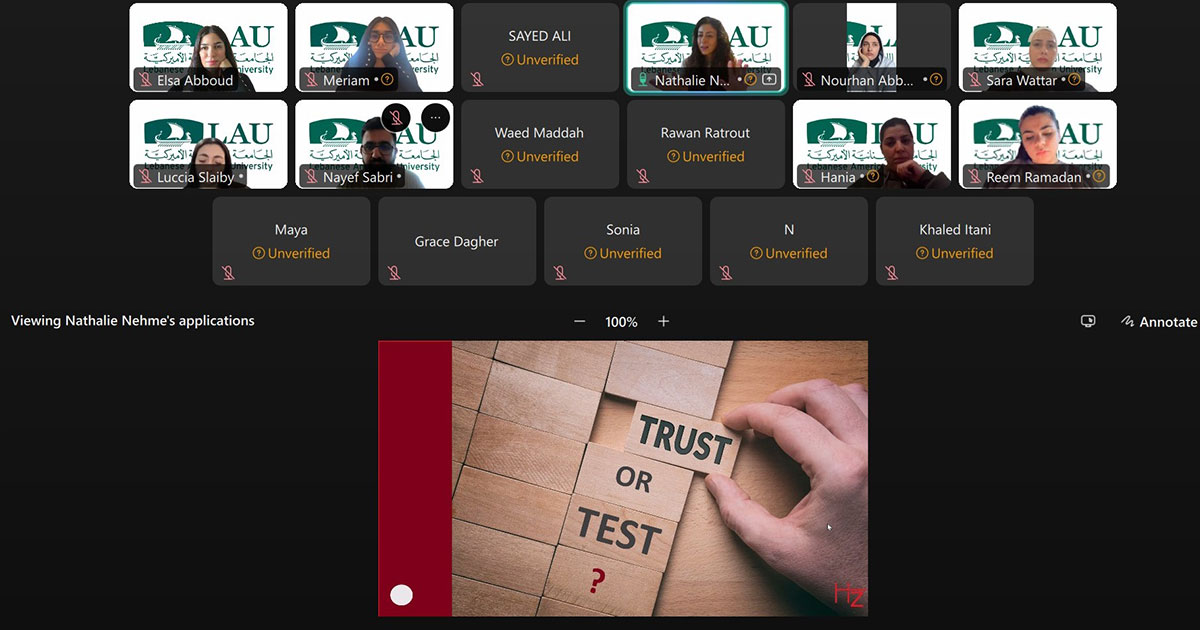
The opening workshop, Lead, Create, Innovate, led by Ms. Nathalie Nehme, People and Culture Architect and Founder ofHueZ, explored leadership as a practice rooted in purpose, trust and critical thinking rather than position or authority.
Through discussion and interactive exercises, participants examined decision-making, active listening and the conditions that allow teams to thrive.
“Leadership begins long before a title,” Nehme said. “It begins in the way we think, the way we listen and the way we create environments where others feel safe enough to contribute and grow.”
The session challenged conventional ideas about success, encouraging participants to focus less on external outcomes and more on discipline, consistency and meaningful impact.
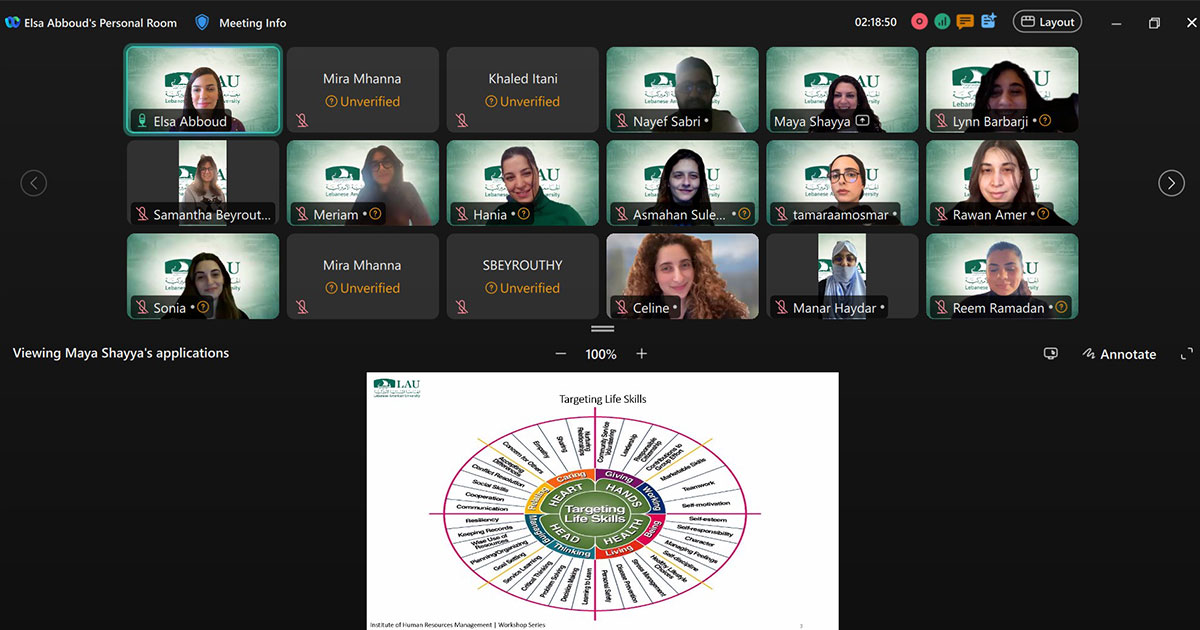
The second workshop, Rise, Adapt, Thrive, led by Dr. Maya Shayya, adjunct assistant professor of management and HR consultant, focused on resilience, emotional intelligence and communication as essential career skills.
Participants explored how self-awareness, emotional intelligence and interpersonal effectiveness shape professional growth, with practical guidance on body language, confidence and authentic connection.
“The strongest professionals are not the loudest,” Dr. Shayya said. “They are often the ones who understand themselves, adapt thoughtfully and know how to build trust in every interaction.”
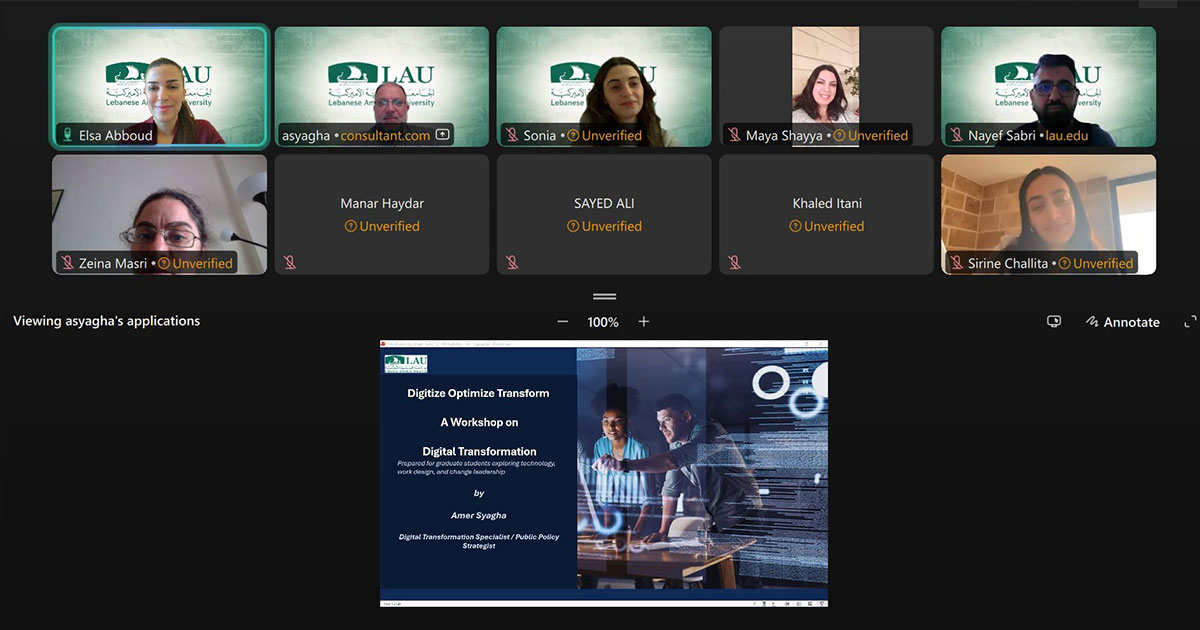
The final session, Digitize, Optimize, Transform, led by digital transformation specialist and public policy strategist Amer Syagha, examined how organizations can rethink workflows and improve efficiency through digital transformation rather than reactive adoption of new tools.
Using practical HR examples, participants explored process redesign, organizational readiness and change management, with particular attention to balancing automation with human judgment.
“Digital transformation is not about adding more technological tools,” Syagha said. “It is about redesigning how organizations think, decide and serve people by using technology more effectively”.
Together, the workshops reinforced IHRM’s focus on preparing professionals to lead with strategic thinking, confidence,and adaptability.