Beirut Economics Research Seminar Series Examines Poverty Beyond Traditional Measures
Using nationally representative data, the seminar explored how different measures can better capture poverty in data-poor countries.
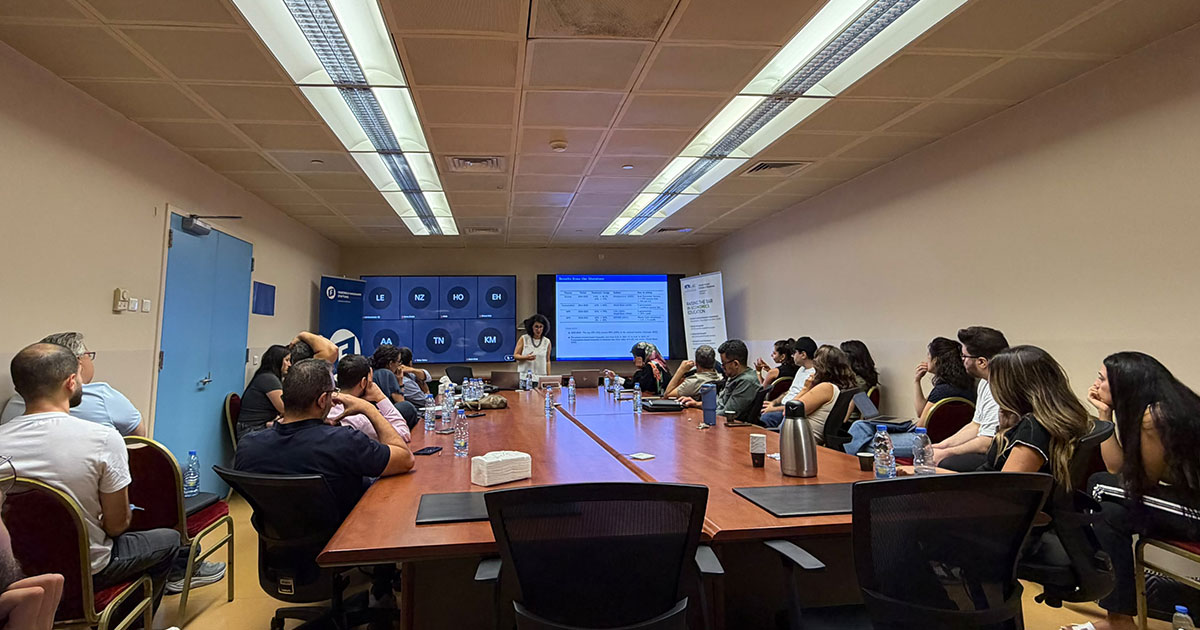
Economics faculty, researchers, students, and professionals gathered at the LAU Beirut campus on September 16 for the Beirut Economics Research Seminar Series, a collaboration between the LAU and AUB Departments of Economics, supported by the Friedrich Naumann Foundation at LAU and the FAS Dean’s Office at AUB. The session featured Dr. Eliane Badaoui of Université de Versailles Saint-Quentin-en-Yvelines (UVSQ), who examined poverty in Lebanon following the succession of crises that began in 2019.Titled For a Richer Understanding of Poverty in Data-Poor Countries: Evidence from Lebanon, the study drew on a nationally representative 2023 survey of 2,402 households and examined poverty through income, expenditure, multidimensional deprivation, and people’s perceptions of their economic circumstances.
Badaoui’s findings identified significant inequality in income and expenditure, disparities across governorates and social groups, and differences in the extent of poverty captured by these measures.
Compared with publicly available pre-crisis data, multidimensional poverty had increased significantly, while the gap between measured and perceived poverty had tripled.
Participants engaged with Badaoui’s study and the broader challenge of understanding poverty where comprehensive data remain limited.